Your Partner Is Not a Mind Reader: Make Your Needs Clear
4-minute read. One conversation tool you can use this week.
Wouldn’t it be wonderful if the people closest to us could read our minds? Imagine never having to explain what you need, what makes you feel loved, what disappoints you, or how someone could support you. They would simply know.
That sounds comforting, but it is not how healthy relationships are built. Real connection is not mind reading. It is the result of knowing yourself, communicating clearly, listening carefully, and following through consistently.
People who seem to “just know” one another usually did not arrive there by magic. They paid attention. They asked questions. They shared what mattered. Over time, they learned each other.
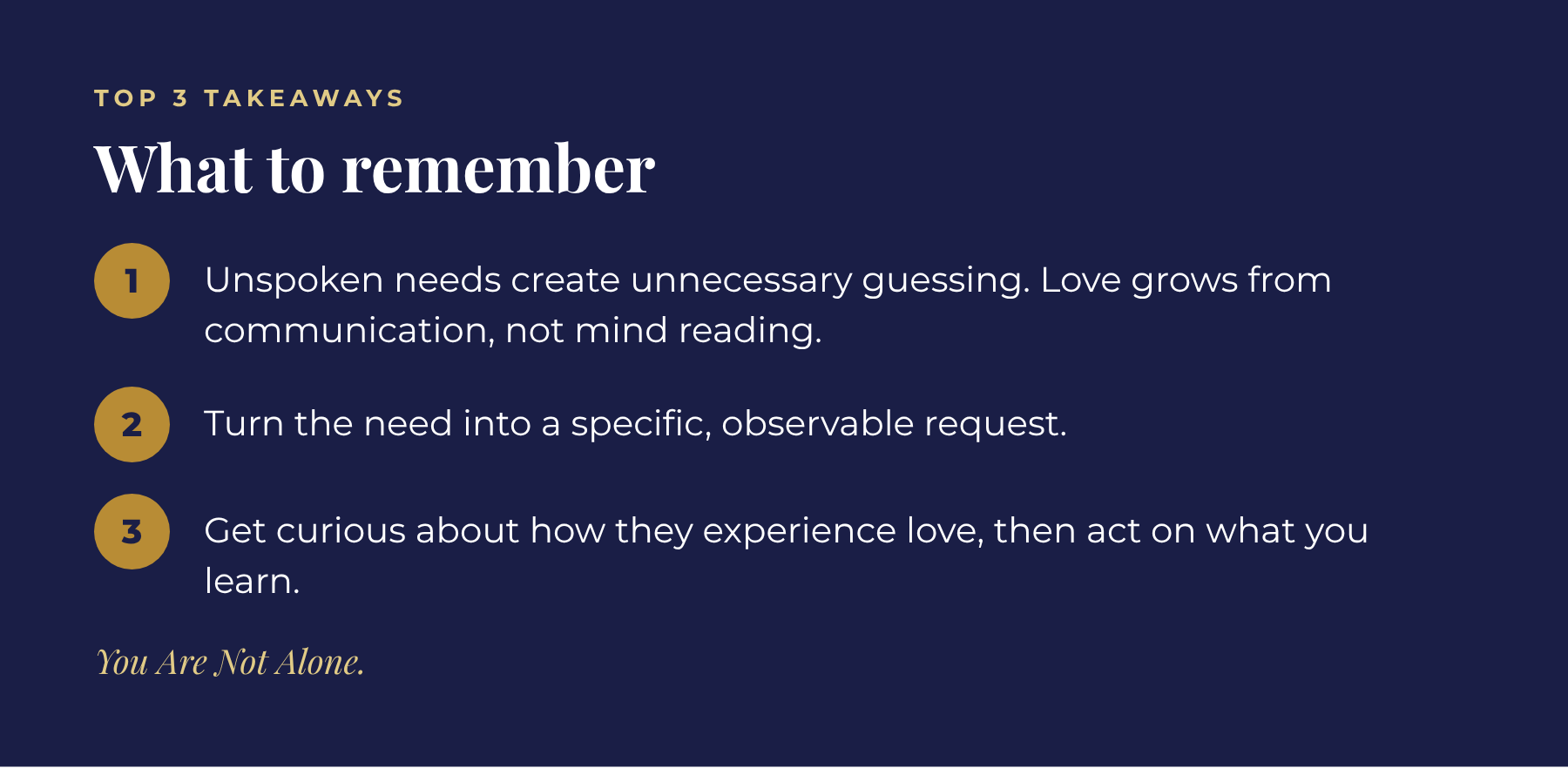
Unspoken Needs Create Unnecessary Guessing
Many relationship conflicts begin with a genuine need that was never communicated in a clear, actionable way. One person thinks, If they really loved me, they would know. The other person may care deeply but still have no idea what successful support looks like.
It is unfair to ask someone to consistently meet needs you have never clearly shared. They may notice clues. They may remember details from earlier conversations. They may even anticipate some of your preferences. That kind of attentiveness matters. But it should grow from a foundation of communication—not replace it.
Consider the difference between these statements:
“I need you to care more.”
“I want to feel important.”
“I need more affection.”
“I want us to spend more time together.”
Each statement carries a real emotional need, but each leaves the listener guessing. What does “care more” mean? A phone call during the day? Help with a particular task? Ten minutes of uninterrupted listening? A hug before leaving home? Planning one evening together every week?
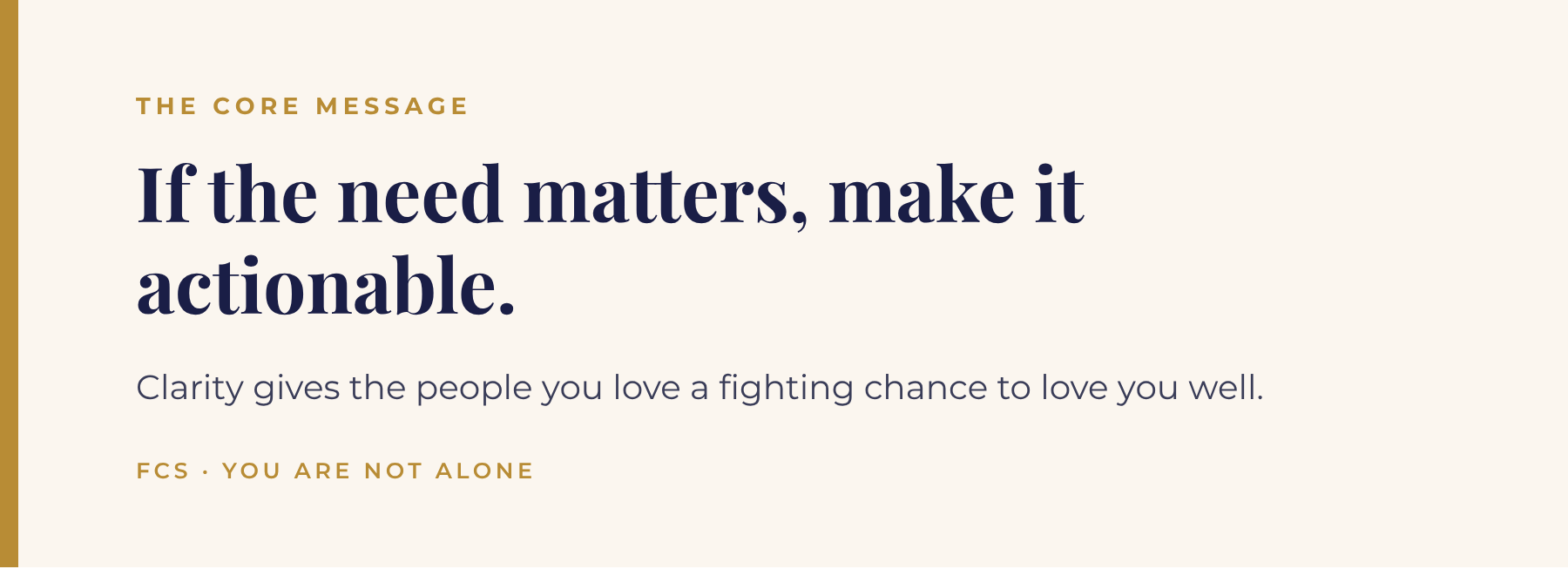
If the need matters, make it actionable.
Start by Knowing What You Need
Clear communication begins before the conversation. It begins with self-awareness.
Ask yourself what you are actually longing for beneath the frustration. Is it reassurance? Appreciation? Partnership? Affection? Attention? Reliability? Rest? Emotional safety?
Then move from the emotional need to a specific behavior. Instead of saying, “Be more supportive,” you might say, “When I have had a difficult day, I feel supported when you listen for ten minutes before offering advice.”
That does not reduce love to a checklist. It gives the other person a practical starting point. It gives them a fighting chance to love you well.
Turn Vague Desires into Clear Requests
A useful request answers three questions:
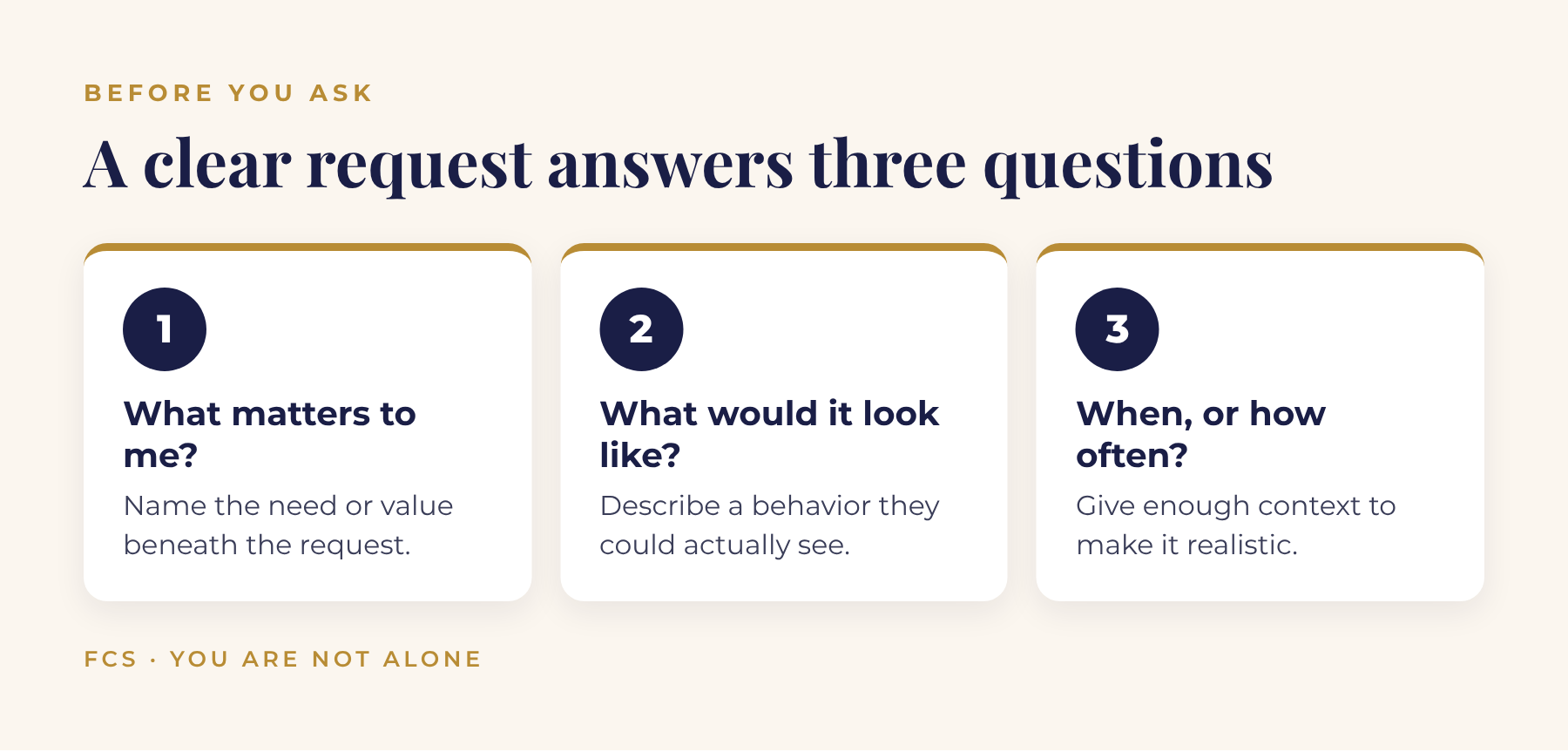
For example:
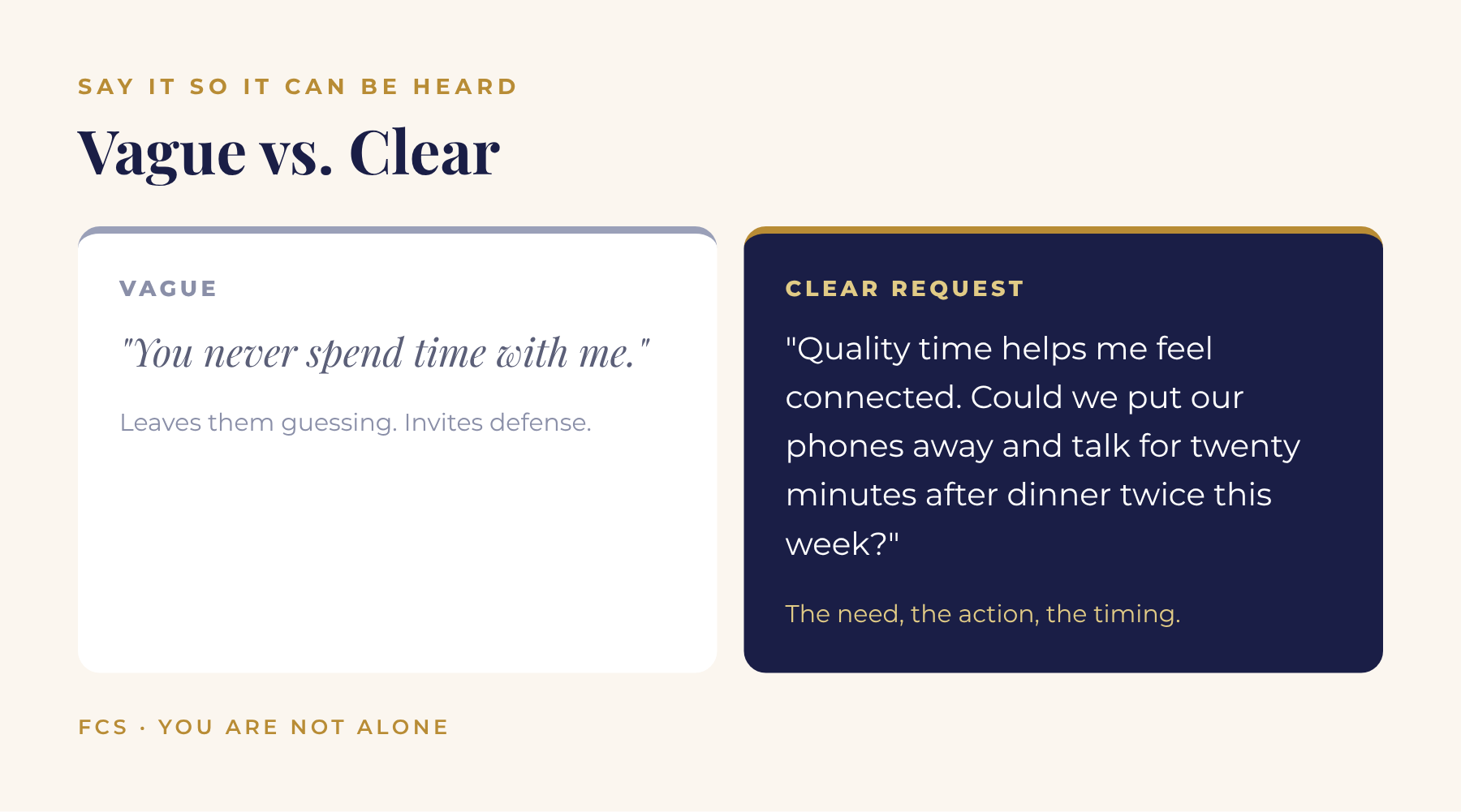
“Quality time is important to me because it helps me feel connected. Could we put our phones away and talk for twenty minutes after dinner twice this week?”
That request is clearer than “You never spend time with me.” It addresses the need without turning the conversation into an attack.
Learn the Other Person, Too
Healthy connection is mutual. You should not only explain how you want to receive care; you should also become curious about how the other person experiences love, respect, and support.
Ask questions such as:
“What helps you feel heard when you are stressed?”
“What kind of affection feels meaningful to you?”
“What makes quality time feel like quality time?”
“What is one small action that helps you feel appreciated?”
Listen without immediately correcting, defending, or comparing. The goal is not to prove that your way is better. The goal is to understand what helps this particular person feel seen.
Then pay attention and practice consistently. Knowing what matters but repeatedly ignoring it does not create connection. Love becomes trustworthy when understanding is followed by dependable action.
Clear Communication Is Not Control
A clear request gives another person useful information. It does not remove their voice, capacity, consent, or right to respond honestly.
Communicating your needs does not guarantee that every need will be met exactly as requested. Sometimes the other person cannot meet the request. Sometimes the two of you will need to negotiate. Sometimes their response reveals a limitation in the relationship—or a place where stronger boundaries are needed.
Clarity still matters because it removes unnecessary guessing. It helps you distinguish between someone who did not understand, someone who lacks capacity, and someone who understands but consistently chooses not to respond.
That information is important.
A Reflection Exercise for This Week
Choose one important relationship and complete these statements:
“I feel loved, supported, or connected when…”
“One specific thing you could do that would help is…”
“One thing I want to understand about your needs is…”
Before sharing your answers, check your tone. The goal is not to deliver a verdict. The goal is to create understanding and invite honest conversation.
Give Connection a Fair Opportunity
Do not make the people you love guess their way into loving you well. Know yourself. Share clearly. Listen deeply. Then give one another the opportunity to practice, learn, and grow.
What looks like mind reading in a strong relationship is usually something more grounded and more powerful: two people who have taken the time to know one another—and who keep choosing to act on what they learn.
If you want a practical structure for listening, speaking, and making clear requests, explore the YES SERR Communication Workbook. It can help you turn good intentions into conversations that build understanding and connection.
Have a question about this? Bring it to the free Live Q&A with Dr. Keith, every Wednesday from 5 to 6 PM Pacific.
You Are Not Alone.
