Hurt Is a Signal, Not a Verdict
Five-minute read. One tool you can use tonight.
You know the moment. Someone says something, or forgets something, or looks at their phone while you are talking. And something in your chest drops.
You tell yourself it is not a big deal. You tell yourself you are being sensitive. But it sits there. It follows you into the evening. It comes out later, sideways, in a tone you did not plan to use.
That feeling has a name. It is hurt. And I want you to understand it, because hurt that is understood can be healed. Hurt that is ignored gets louder.
The core message
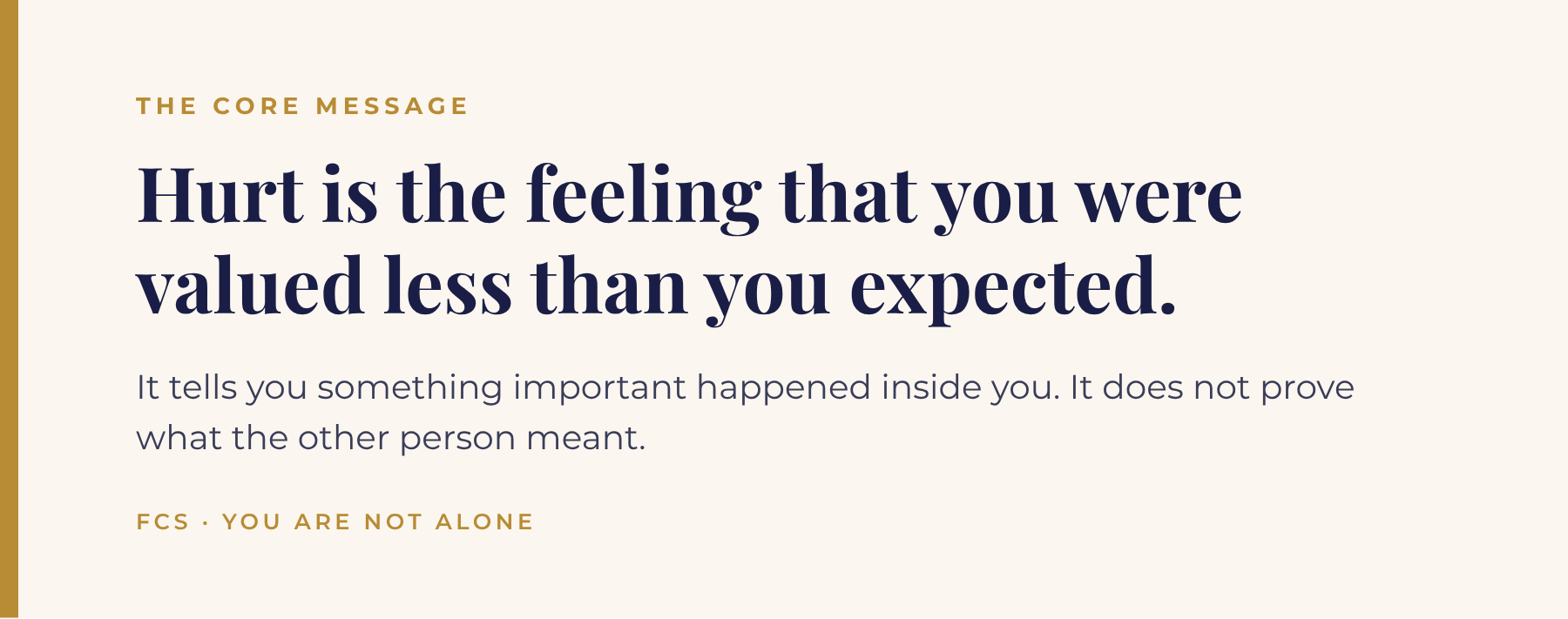
Something that was said or done seemed to say, "You matter less than you thought you did."
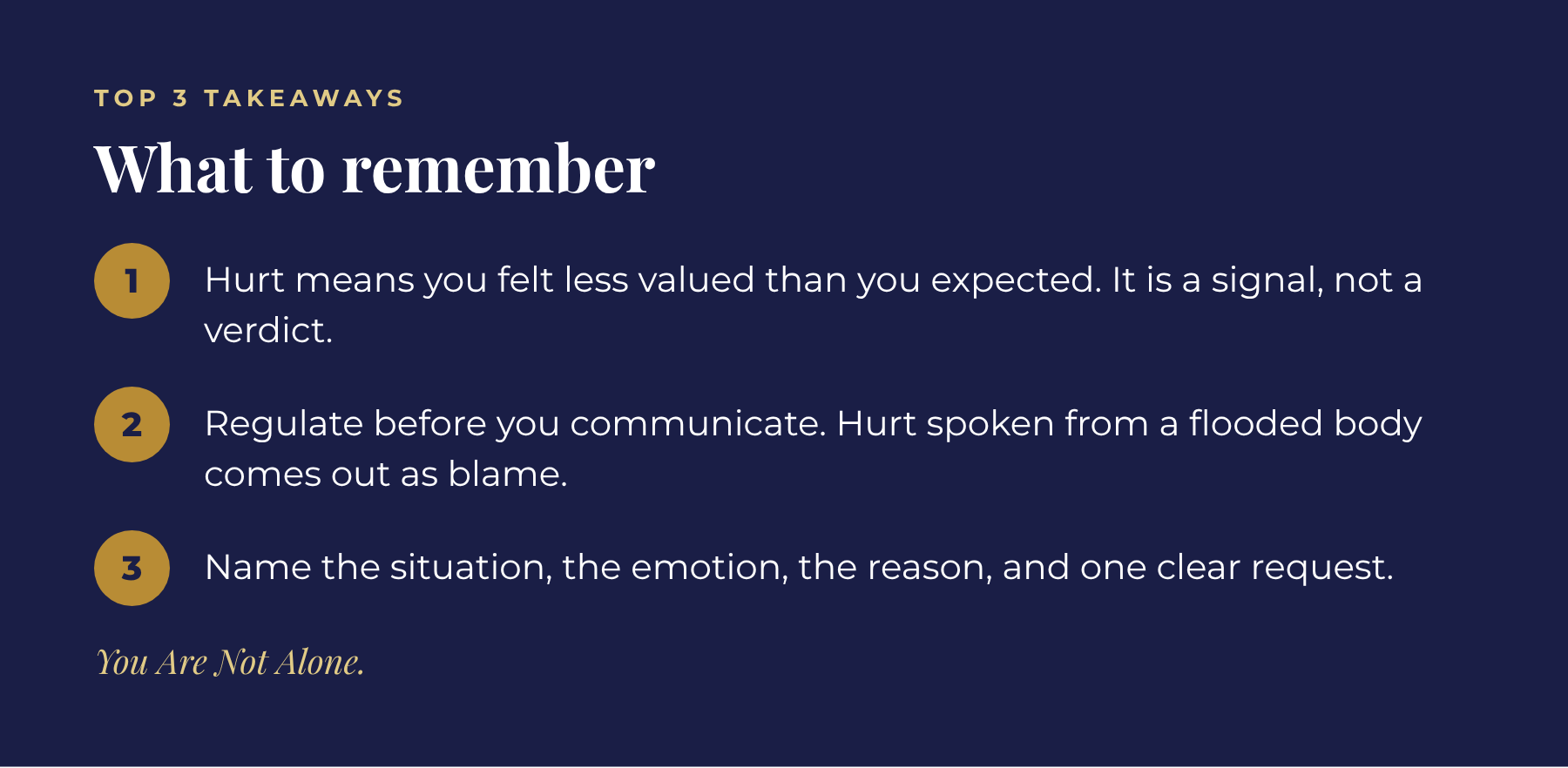
Read that again, slowly. Seemed to say. Hurt is a signal, not a verdict. It tells you something important happened inside you. It does not prove what the other person meant.
What this means for you
If you have been carrying hurt, you are not weak and you are not dramatic. You are a person who cares about a relationship, and a part of you noticed a gap between what you hoped for and what you received.
That noticing is healthy. The problem is not the hurt. The problem is what we do with it:
We swallow it, and it turns into distance.
We store it, and it turns into resentment.
We throw it, and it turns into an argument nobody wins.
None of those get you what you actually want, which is to feel valued again.
Why hurt hits so hard
Hurt lands hard because connection is not a luxury. Your brain treats belonging as a basic need. When a moment suggests you matter less to someone important, your nervous system reacts as if something real is at stake, because to you, it is.
Then your mind starts writing a story. "They don't care." "I'm always last." "This always happens." The thought fuels the feeling, the feeling fuels the thought, and within minutes a forgotten text has become proof that you are not loved.
This is the cycle CBT teaches us to slow down: thoughts shape feelings, and feelings shape behavior. If you speak from inside that storm, you will not sound hurt. You will sound angry, cold, or accusing. And the other person will defend themselves instead of hearing you.
What to do instead
You do not have to choose between silence and an explosion. There is a third way.
1. Regulate first, using FAST
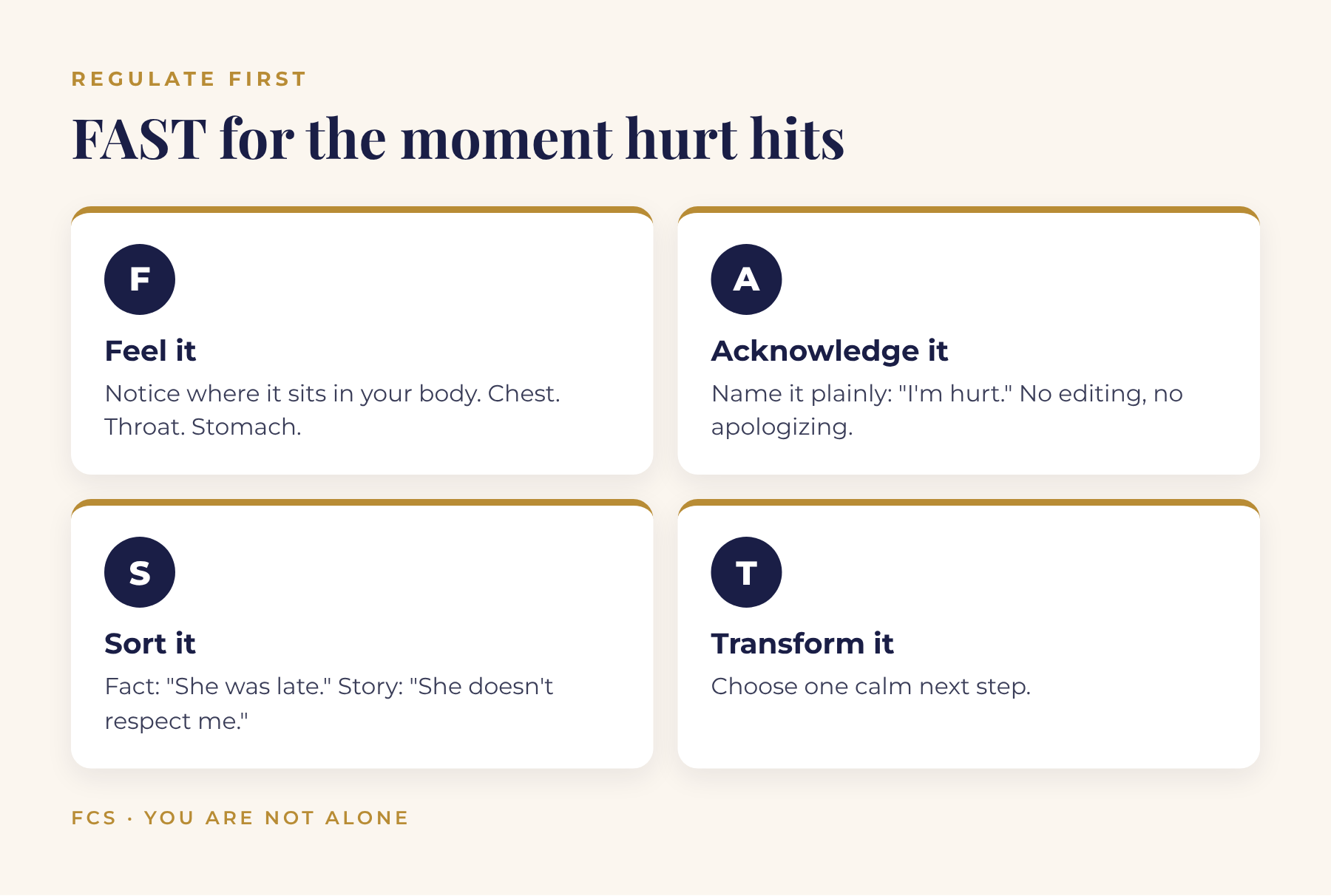
2. Check the expectation
Ask yourself honestly: did the other person know what I was hoping for? A lot of hurt comes from expectations we never said out loud. That does not make your hurt wrong. It makes it something you can talk about.
3. Speak with SERR, not blame
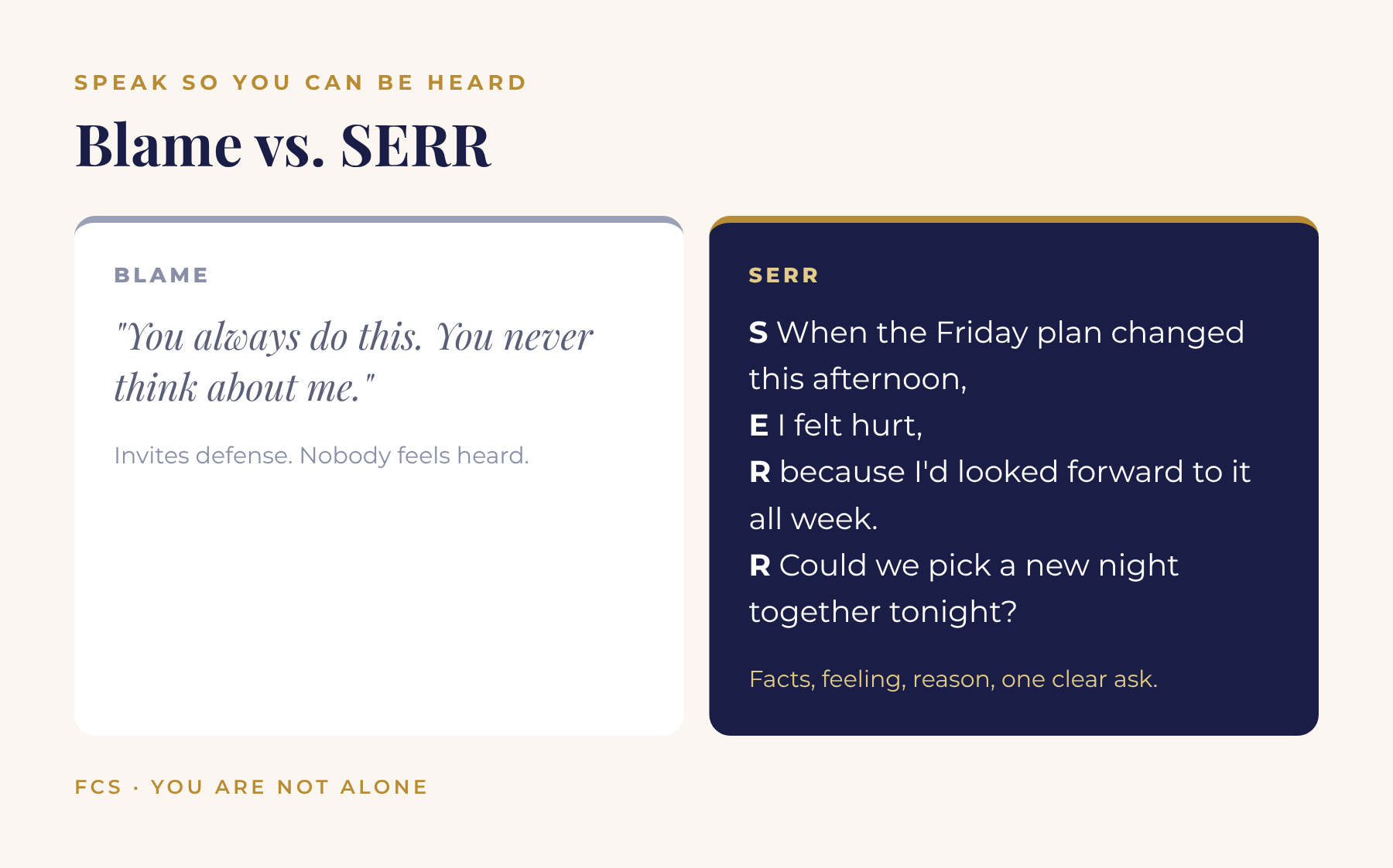
Notice what is missing. No "you always." No "you never." No attack on who they are. Just what happened, what you felt, why it mattered, and what would help.
4. If you are the listener, use YES
When someone tells you they are hurt, do not defend first.
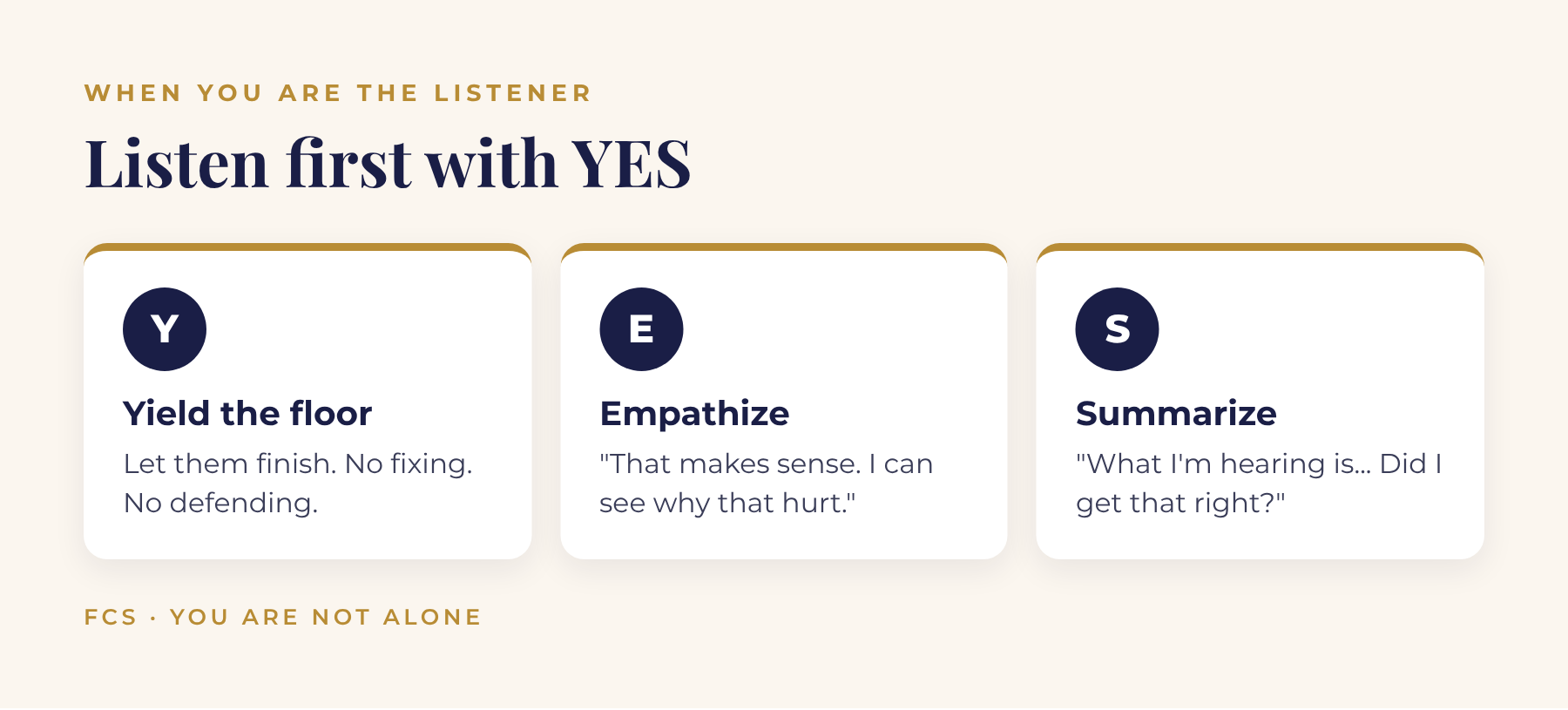
Listen first. Then speak. That order changes everything.
Do this today
Think of one recent moment that still stings. Just one. Run it through FAST on paper. Then write a single SERR sentence about it, even if you never say it out loud. You will be surprised how much lighter the moment feels once it has words.
If you want help naming what you feel, I made a free tool for exactly this. The FCS Emotion Decoder puts the emotions on one wheel and shows what each one may be telling you, and what to do next. It comes in the free FCS Starter Kit along with three of my core tools.
You do not have to carry this alone.
Have a question about this? Bring it to the free Live Q&A with Dr. Keith, every Wednesday from 5 to 6 PM Pacific.
You Are Not Alone.
Dr. Keith A. Fairclough Jr., EdD, LMHC
This article is educational and is not therapy or a substitute for care from a licensed professional. If you are in crisis, call or text 988, or call 911 in an emergency.
