Your Emotions Are Information, Not Instructions
4-minute read. One regulation tool you can use today.
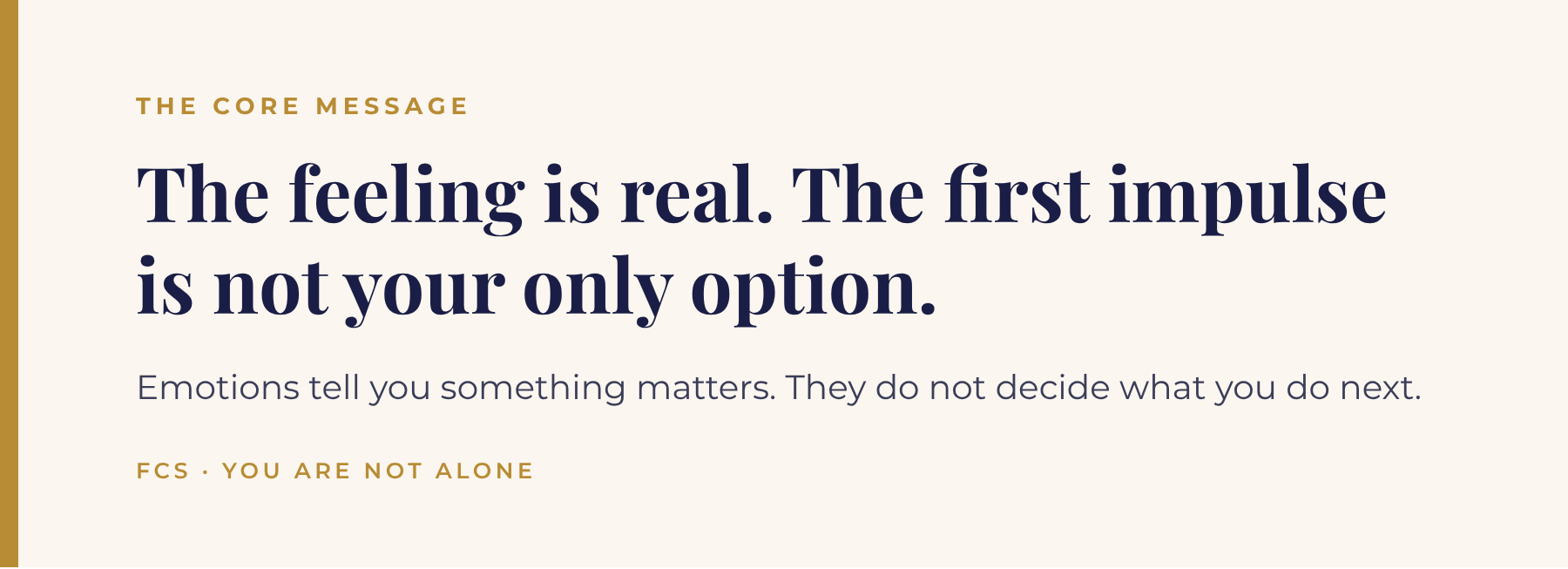
Your emotions deserve your attention. They do not have to control your next decision.
That distinction is at the heart of emotional regulation. Emotional regulation is not about pretending you are fine, refusing to feel, or pushing difficult emotions out of sight. It is the ability to notice what is happening inside you, understand what the emotion may be communicating, and choose a response that supports your values, relationships, and well-being.
This skill affects nearly every area of life. It can help you move through conflict with more clarity, recover from disappointment without abandoning yourself, and respond to pressure without allowing one intense moment to make a lasting decision for you.
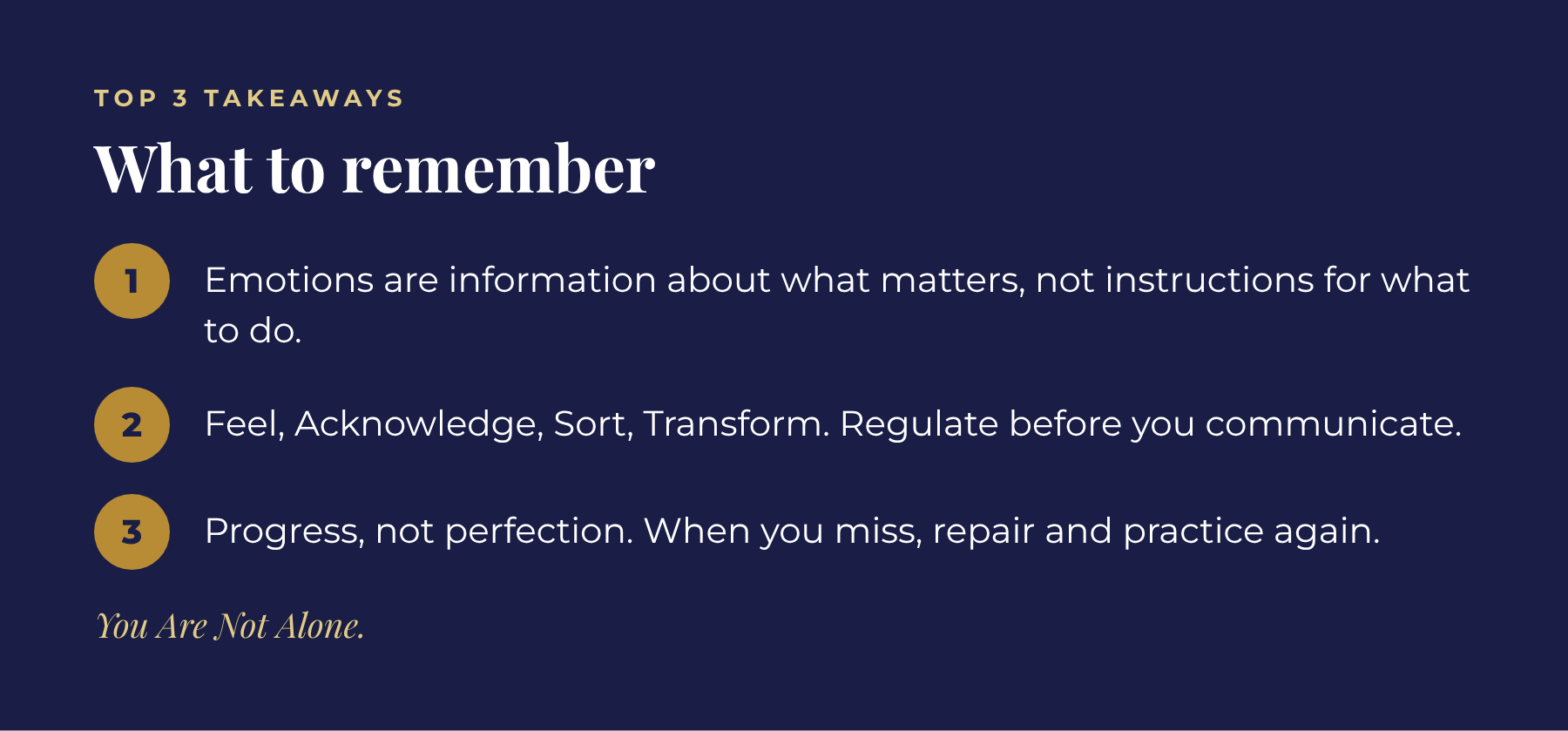
Emotions Are Information—Not Instructions
An emotion can tell you that something matters. Anger may point to a crossed boundary or an unmet expectation. Anxiety may alert you to uncertainty, risk, or a need for preparation. Sadness may signal loss. Guilt may invite you to examine whether your behavior aligned with your values.
But an emotion does not automatically tell you the whole truth about a situation. It also does not always tell you what action will help.
You can feel rejected without having all the facts. You can feel guilty for establishing a healthy boundary. You can feel anxious while doing something meaningful. You can feel angry and still choose not to be cruel.
The feeling is real. The first impulse is not your only option.
The FAST Method: Four Steps to Regulate Before You Respond
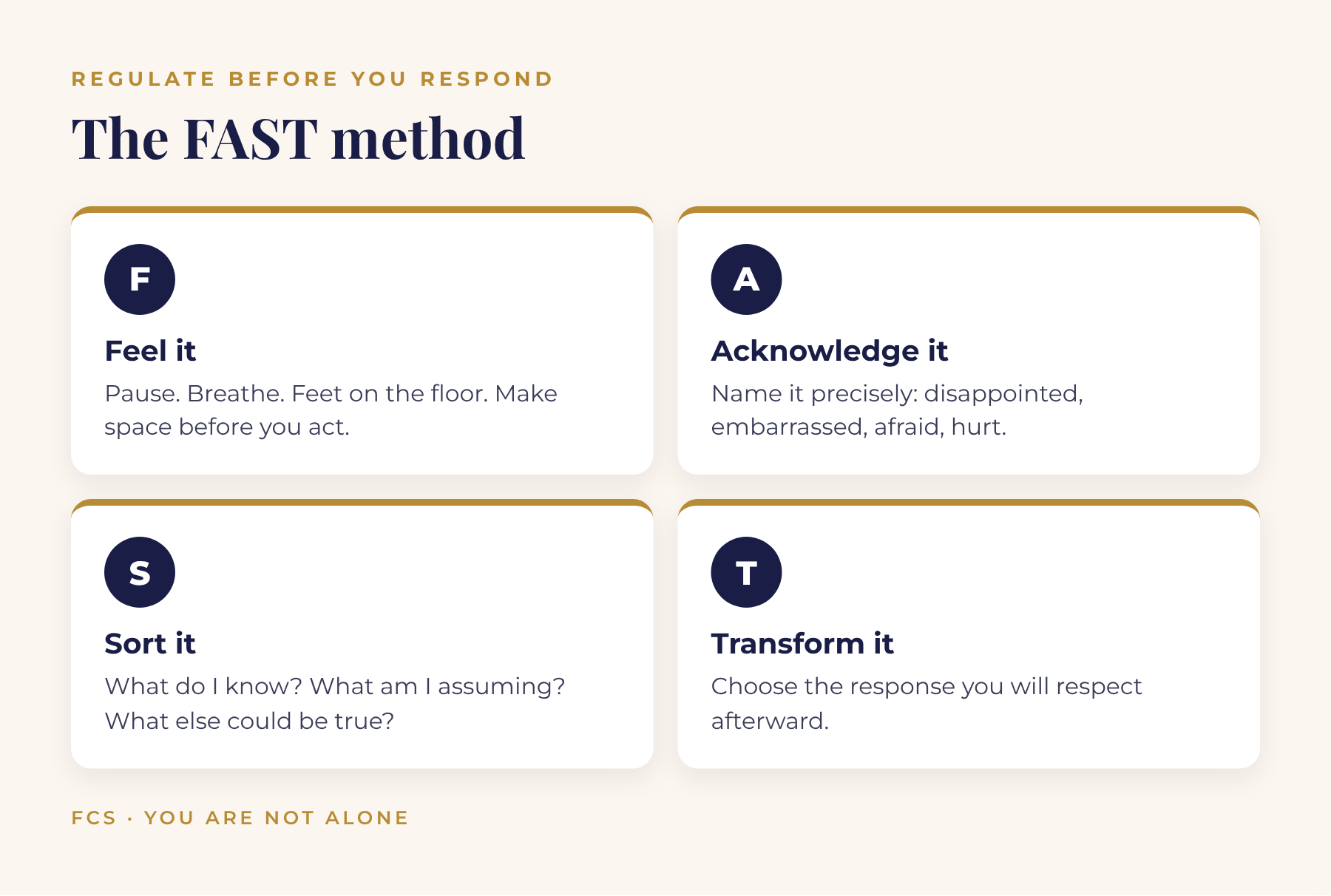
F: Feel It (Pause Before You Act)
Create a small space between the emotion and your response. Take a slow breath. Put your feet on the floor. Release the tension in your jaw and shoulders. If a conversation is becoming unproductive, say, “I want to respond well. I need a few minutes, and I will come back to this.”
A pause is useful when it helps you regulate and return. It becomes avoidance when you disappear, refuse to communicate, or use silence as punishment. If you request a pause, be clear about when you will revisit the conversation.
Practice it with me: This 7-minute guided breathing session walks you through a slow, steady breathing pattern. Follow the count in the video, but remember the count is a guide, not a rule. What matters most is a long, slow exhale, longer than your inhale. Use it morning and bedtime so the skill is there when you need it.
A: Acknowledge It (Name What You Are Feeling)
Move beyond “good,” “bad,” or “upset.” Are you disappointed, embarrassed, afraid, overwhelmed, lonely, frustrated, hurt, resentful, or ashamed?
Naming the emotion gives you something specific to understand instead of one large wave to obey. It can also help you identify what the moment requires. Disappointment may need acceptance. Confusion may need clarification. Fear may need preparation, support, or a careful safety decision. Hurt may need honest communication and a boundary.
S: Sort It (Check the Facts and the Story)
Ask yourself:
What do I know?
What am I assuming?
What meaning have I attached to what happened?
What else could be true?
Is this emotion responding only to the present, or is an earlier experience also being activated?
You do not have to dismiss the feeling to examine the interpretation. You can honor your emotional experience and still make room for missing information, another perspective, or a more accurate explanation.
T: Transform It (Choose the Next Useful Response)
Ask what action aligns with the person you want to be. Do you need to communicate clearly, establish a boundary, repair harm, ask for support, rest, gather more information, or wait until your body is calmer?
The next useful response is not always the one that provides the fastest relief. Avoiding the conversation may reduce anxiety for an hour while allowing resentment to grow. Sending an angry message may release pressure for a moment while damaging trust. The goal is a response you can respect afterward.
Regulation Is Not Suppression
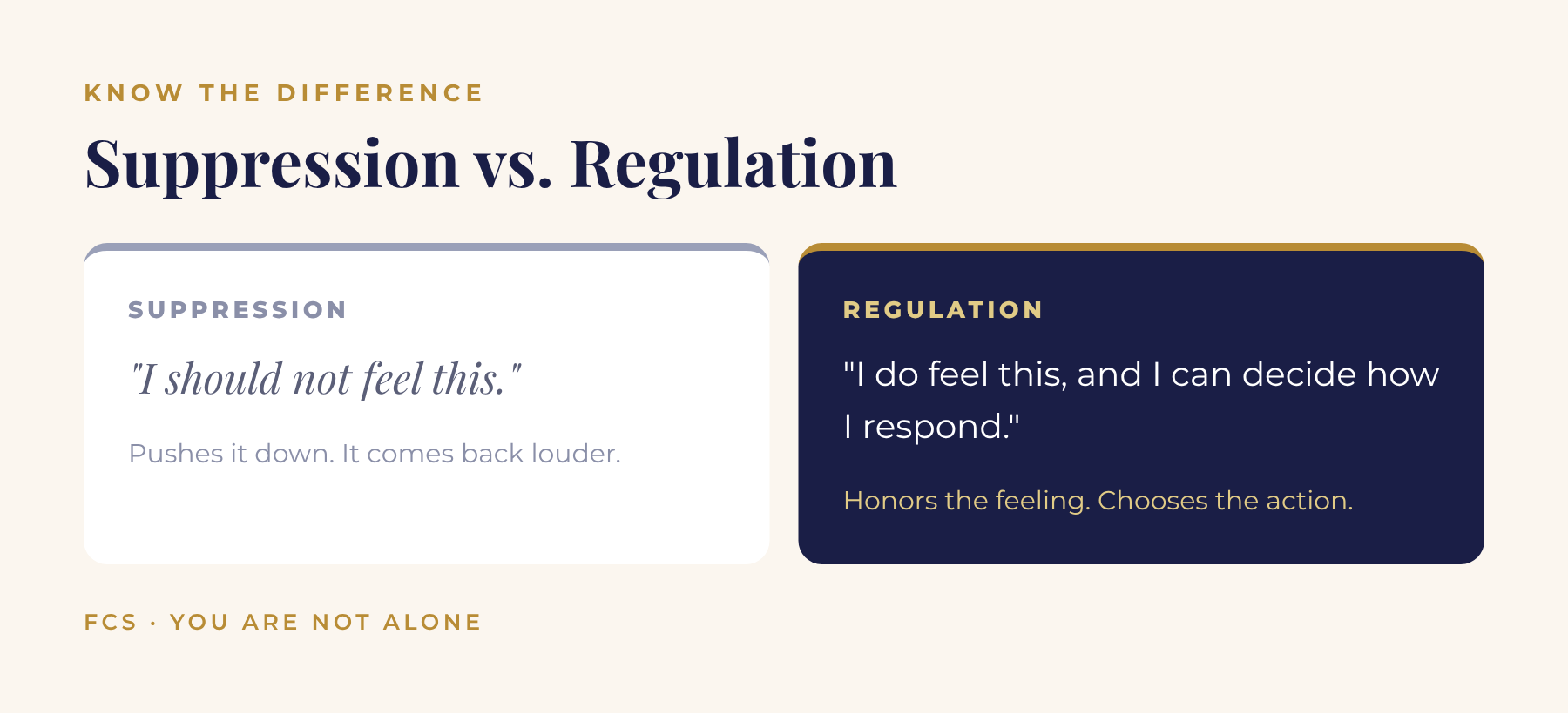
Suppression says, “I should not feel this.” Regulation says, “I do feel this, and I can decide how I respond.”
You may need to cry, write, pray, move your body, sit quietly, talk with someone trustworthy, or take time before continuing a difficult conversation. Those responses can make room for an emotion without allowing it to take over the entire day.
Regulation also does not mean staying calm while someone repeatedly mistreats you. Sometimes the regulated response is a direct conversation, a clear limit, or a decision to step away from an unhealthy pattern. Calm is not the only evidence of health. Clarity, honesty, safety, and self-respect matter too.
A Reflection Practice for This Week
Choose one recurring emotional trigger and complete these prompts:
When this happens, I usually feel…
The story I quickly tell myself is…
The impulse I usually have is…
The facts I know are…
A response that better reflects my values would be…
Then prepare before the next trigger arrives. Decide what words you will use to request a pause. Choose where you can take three slow breaths. Write down the question that helps you check your assumptions. Identify one trustworthy person you can contact when you need support.
You do not have to wait until you are overwhelmed to practice the skill.
Practice Progress, Not Perfection
Emotional regulation is a journey. You will not respond perfectly every time, and perfection is not the goal. The goal is to notice sooner, understand more clearly, recover more responsibly, and choose more intentionally.
When you respond in a way you regret, regulation can still guide the repair. Acknowledge what happened. Take responsibility without making excuses. Apologize when appropriate. Identify what you will practice differently the next time.
Every difficult emotion is an opportunity to learn more about what matters to you and how you want to move through the world.
If intense emotions are repeatedly shaping your relationships, decisions, or daily well-being, consider working with a professional. If you live in Nevada or Florida, you can book a free consultation for therapy with me. Wherever you are, the FCS Emotional Mastery workbooks give you a structure to practice FAST every day.
Have a question about this? Bring it to the free Live Q&A with Dr. Keith, every Wednesday from 5 to 6 PM Pacific.
You Are Not Alone.
